Categories
Business Cryptocurrency Featured Investment News Stocks Swing Trading Trade Setups

Charted Territory Podcast – Stephen Salvatore & Jon Cartagena | MarketScope.ai

Charted Territory Podcast – Stephen Salvatore & Jon Cartagena | MarketScope.ai
Podcast Trading Journey Mentorship

Charted Territory: Where Markets Meet Mastery

The Charted Territory Podcast from MarketScope.ai follows veteran trader-founder Stephen Salvatore as he mentors his right-hand man and student, Jon Cartagena, from absolute beginner to disciplined operator. Each week documents the realities of learning to trade—context, setups, risk, and psychology—using the same playbooks published at MarketScope.ai.

Charted Territory Podcast cover
Track Jon’s week-by-week growth, download companion notes, and access the education hub at MarketScope.ai. Episodes, worksheets, and chartbooks are updated alongside the show at MarketScope.ai.

The Premise: Turn Noise into an Edge

Markets are loud. Beginners drown in conflicting takes. On Charted Territory, Stephen slows the chaos into a repeatable sequence: context → setup → risk → execution → management. Listeners watch Jon apply this sequence in real time, starting from scratch and iterating toward mastery—with every framework mirrored on MarketScope.ai.

Stephen Salvatore — The Master Strategist

Architect of the proprietary systems at MarketScope.ai, Stephen teaches process over prediction: multi-timeframe alignment, pre-planned invalidation, and asymmetric payoffs. His mentorship emphasizes discipline, sizing, and “only A+ trades,” reinforced with dashboards and checklists hosted on MarketScope.ai.

Jon Cartagena — The Student’s Journey

Jon begins as a true novice. He asks the questions everyone is afraid to ask and commits to public accountability. Each episode captures his mistakes, adjustments, and breakthroughs, mapped directly to the templates and trackers on MarketScope.ai. The goal: build instinct from structure.

Signature Segments

  • Lesson of the Week: Stephen introduces a core concept (trend vs. trigger, VWAP, opening range, trailing logic) with references to tools on MarketScope.ai.
  • Jon’s Recap: A candid look at wins, errors, and what changes next—journal prompts available at MarketScope.ai.
  • Live Mentorship: Corrections in real time—entries tightened, stops clarified—mirrored by worksheets on MarketScope.ai.
  • Student Chartbook: Annotated charts published alongside episodes at MarketScope.ai.
  • Mindset Reset: Routines to handle fear, revenge trading, and FOMO—checklists housed at MarketScope.ai.

From Idea to Execution: The Weekly Flow

Episodes often open with macro context and sector rotation, shift into breadth and relative strength, and then crystalize two or three candidate trades. Stephen and Jon plot scenarios—trend continuation, mean reversion, failed breakout—assign probabilities, and pre-define invalidation. The next day’s debrief ties outcomes back to the plan, with receipts posted at MarketScope.ai. That plan-act-review loop is the backbone of MarketScope.ai training.

Why This Story Matters

Most shows feature experts debating takes. Charted Territory features the making of a trader. Jon’s learning curve is the curriculum: first clean stop, first 2R exit, first week of zero impulsive trades. Each milestone becomes an episode—and a downloadable resource—on MarketScope.ai.

Community & Accountability

The podcast doubles as a cohort experience. Community challenges ask listeners to mirror Jon’s assignments—define risk, journal the outcome, grade the process. Submissions and summaries are archived at MarketScope.ai, reinforcing repetition and transparency.

The Toolkit

Progress Benchmarks

  • Week 1–2: Pattern naming, risk basics (resources on MarketScope.ai)
  • Week 3–4: Invalidation, position sizing (worksheets at MarketScope.ai)
  • Week 5–8: Multi-timeframe alignment (dashboards via MarketScope.ai)
  • Ongoing: Trailing logic, review cadence (playbooks on MarketScope.ai)

How to Listen & What to Do Next

New and archived episodes, show notes, and Jon’s annotated trades are centralized at MarketScope.ai. Keep a tab open to MarketScope.ai while you listen—use the companion pages to follow the plan, execute your version, and review with receipts. Want the templates? They’re all organized on MarketScope.ai alongside the podcast hub.

Start the Journey: queue the latest episode, download the lesson pack, and track your own progress just like Jon. Everything lives on MarketScope.ai.

Conclusion

Charted Territory is more than market talk—it’s a living record of a student becoming a trader under a master’s system. With Stephen Salvatore’s structure and Jon Cartagena’s public accountability, the show delivers both education and proof. If you’re serious about turning noise into an edge, the blueprint is waiting at MarketScope.ai—and a new chapter drops each week.


Categories
Business Featured Investment News Latest News

A Day of Highs, Lows, and Fed Hopes: Market Recap for September 5, 2025

Market Recap – September 5, 2025

Friday’s trading session brought no shortage of drama on Wall Street. U.S. equities flirted with record highs early in the day, buoyed by hopes that the Federal Reserve may be forced into cutting rates sooner than expected. But as the session wore on, the euphoria cooled, and by the closing bell the major averages delivered a mixed performance. Investors digested a surprisingly weak August jobs report, soaring semiconductor optimism, and sharp swings in consumer discretionary names. The result: a market torn between fear of economic slowdown and anticipation of fresh stimulus.

Labor Market Wake-Up Call

The tone of the day was set by the release of the August employment report. Employers added just 22,000 jobs, far short of consensus estimates and a glaring sign of labor market weakness. Making matters worse, revisions to earlier months revealed that June actually saw job losses instead of modest gains. The unemployment rate ticked higher to 4.3%, in line with forecasts but still a sobering reminder that the labor market is losing steam.

For months, economists had debated whether the U.S. labor market could withstand elevated borrowing costs. Friday’s numbers tilted the argument. Not only did they reflect slowing hiring momentum, but they also highlighted the fragility of wage growth and participation rates. For workers, the report suggested opportunities may be drying up; for businesses, it implied an uncertain path forward as consumer demand could taper in step with job creation.

Federal Reserve Implications

Markets wasted little time in recalibrating expectations for monetary policy. Futures markets quickly priced in a much higher probability of a 25-basis-point rate cut at the Fed’s upcoming meeting, with some traders even entertaining the possibility of a 50-basis-point cut. The narrative has shifted: what had been a conversation about “if” the Fed cuts rates has become a discussion of “how much.”

The policy implications are profound. On one hand, easier financial conditions could extend the equity rally that has already driven benchmarks to record territory this year. On the other, the fact that cuts may be required highlights just how much economic momentum has slowed. This paradox—stimulus optimism against growth anxiety—defined investor sentiment throughout the day.

Bond Market Reaction

As equities wrestled with mixed emotions, the bond market offered its own verdict. Yields tumbled sharply, with the 10-year Treasury note falling nearly nine basis points to around 4.09%. The drop reflected a flight to safety, as well as a recalibration of long-term growth and inflation expectations. Lower yields, of course, ease borrowing costs for households and corporations, but they also underscore investor concern that the economy may be weaker than surface-level GDP numbers suggest.

Intraday Swings & Index Performance

The early hours of trading were dominated by enthusiasm. The S&P 500 and Nasdaq Composite both set fresh intraday records, with the S&P briefly touching 6,532. But profit-taking set in as the afternoon progressed, erasing most of those gains.

  • S&P 500: Fell 0.3% to 6,481.50
  • Dow Jones Industrial Average: Declined 0.5% to 45,400.86
  • Nasdaq Composite: Slipped less than 0.1% to 21,700.39
  • Russell 2000: Gained 0.5% to 2,391.05

While Friday’s tape looked somewhat downbeat, the weekly picture was healthier. The S&P advanced 0.3%, the Nasdaq 1.1%, and the Russell 2000 1%, though the Dow slipped 0.3%. On a year-to-date basis, major indices remain firmly higher: the S&P up 10.2%, the Nasdaq 12.4%, the Dow 6.7%, and the Russell 2000 up 7.2%.

Sector Spotlights and Stock Movers

Broadcom’s AI Boom

The clear winner of the day was Broadcom, which surged as much as 13% following a blowout quarterly earnings report. The semiconductor giant credited accelerating demand for its AI-related chips, reportedly including a massive $10 billion order from OpenAI. Investors cheered the results as further confirmation that AI remains the defining growth story of this market cycle. The rally helped lift the broader tech sector, though gains were uneven as other names struggled with profit-taking.

Lululemon’s Plunge

On the other end of the spectrum, Lululemon tumbled nearly 19% after slashing its full-year guidance. Management cited the impact of new tariffs and weaker-than-expected same-store sales growth. The result was a harsh reminder that even premium consumer brands are vulnerable to slowing discretionary spending and geopolitical trade headwinds. Retail peers fell in sympathy, underscoring just how fragile the consumer segment has become.

Tesla’s $1 Trillion Proposal

Tesla shares gained roughly 4% after its board floated a bold new compensation package for CEO Elon Musk. The proposal, tied to ambitious performance goals, could be worth up to $1 trillion. While some investors balked at the sheer size of the package, others saw it as a signal of confidence in Musk’s ability to continue driving transformational growth. Tesla’s rally also reflected broader optimism about EV adoption trends and technological innovation.

Other Notable Movers

  • Guidewire Software jumped 20% after strong earnings.
  • Samsara surged about 16% on upbeat guidance and robust demand.
  • Kenvue fell around 9% as consumer healthcare growth disappointed.
  • AMD, UiPath, DocuSign, Braze, ServiceTitan, Pool Corp., and Phreesia all posted double-digit swings tied to quarterly results and analyst adjustments.

Weekly & Year-to-Date Context

Friday’s pullback did little to erase the broader momentum of the week. Tech stocks remained firmly in the driver’s seat, while small caps delivered a surprisingly strong performance. The rotation suggested investors are seeking value beyond the mega-cap tech universe, though volatility continues to run high. Year-to-date, the Nasdaq remains the market’s standout performer thanks to AI enthusiasm, while the Dow lags slightly behind.

Looking Ahead

Investors now turn their attention to next week’s critical CPI inflation report, which will help clarify the Fed’s path forward. With labor market weakness now firmly on the radar, inflation dynamics will likely determine whether policymakers pull the trigger on a larger-than-expected rate cut. Corporate earnings season also continues, with more retailers and tech names set to report.

The overarching theme remains the same: Wall Street is caught in a tug-of-war between economic caution and stimulus optimism. AI-driven growth stories like Broadcom and Tesla continue to fuel enthusiasm, while consumer names such as Lululemon highlight areas of fragility. For traders and long-term investors alike, the days ahead promise more volatility—and more opportunities.

Conclusion

September 5, 2025, will be remembered as a day when markets brushed against the sky only to drift lower under the weight of sobering data. The jobs report reminded investors that the economy’s engine is sputtering, but the Fed’s potential response kept hopes alive. As bond yields plunged and stocks shuffled between winners and losers, the market’s message was clear: the balance between risk and reward has rarely felt more precarious. With critical inflation data looming, traders will head into next week bracing for turbulence but also eager for the next catalyst.

Categories
Business Featured

Apple Leaps into the Future: Embracing AI to Reshape Technology

In the ever-evolving landscape of technology, Artificial Intelligence (AI) has become a pivotal element, driving innovation and transforming industries across the globe. Among the titans of tech, Apple Inc. has taken significant strides to integrate AI into its ecosystem, signaling a robust commitment to harnessing the power of machine learning and AI to revolutionize its products and services. This article delves into Apple’s journey towards becoming an AI powerhouse, exploring its strategic initiatives, product innovations, and the implications of its AI ventures for the future of technology.

Apple’s AI Evolution: A Strategic Pivot

Historically, Apple’s approach to AI and machine learning has been one of cautious integration, focusing on enhancing user experience while prioritizing privacy and security. However, in recent years, the Cupertino-based giant has accelerated its AI efforts, recognizing the transformative potential of AI technologies. Apple’s strategic pivot towards AI is evident in its substantial investments in research and development, acquisitions of AI startups, and recruitment of top AI talent.

Investing in AI Research and Development

Apple’s commitment to AI is underscored by its increased spending on research and development (R&D). The company has significantly expanded its R&D budget, allocating billions of dollars towards developing cutting-edge AI technologies. This investment supports a wide range of initiatives, from improving Siri, Apple’s virtual assistant, to enhancing AI capabilities in Apple’s hardware and software offerings.

Acquiring AI Startups

Another key aspect of Apple’s AI strategy is its acquisition of AI startups. These acquisitions have bolstered Apple’s AI expertise and accelerated the development of AI features in its products. Notable acquisitions include Turi, a machine learning platform, and VocalIQ, a speech recognition startup, which have been instrumental in enhancing Siri’s capabilities and making it more conversational and context-aware.

Attracting Top AI Talent

To lead its AI charge, Apple has been aggressively hiring leading AI researchers and engineers. The company has formed a dedicated AI team, comprising experts in fields such as machine learning, computer vision, and natural language processing. This team is tasked with advancing AI research and integrating AI technologies into Apple’s product lineup, ensuring that Apple remains at the forefront of AI innovation.

AI-Driven Product Innovations

Apple’s deep dive into AI is not just about research; it’s about redefining the user experience across its ecosystem through AI-driven innovations. From the iPhone and Apple Watch to Macs and beyond, AI is becoming a cornerstone of Apple’s product design and functionality.

Enhancing Siri

Siri, the voice-activated assistant that has been a staple of Apple devices since 2011, has received significant upgrades powered by AI. Apple has improved Siri’s understanding of natural language, enabling it to offer more accurate responses and perform a wider range of tasks. Furthermore, Apple has leveraged AI to make Siri more personalized, allowing it to anticipate user needs and offer timely suggestions.

Revolutionizing Photography and Video

Apple has also harnessed AI to revolutionize photography and video on its devices. The iPhone’s camera system uses AI for features like Smart HDR, which optimizes image quality by intelligently adjusting exposure; and Deep Fusion, which enhances detail in low-light conditions. Similarly, the Photos app uses machine learning to organize photos and create personalized memories, showcasing Apple’s commitment to leveraging AI to enrich user experiences.

Advancing Health and Wellness

In the realm of health and wellness, Apple Watch has emerged as a leader, thanks in part to AI. The device uses machine learning algorithms to monitor heart rate, detect falls, and even predict potential health issues. These capabilities exemplify how Apple is using AI to make meaningful impacts on users’ lives, providing them with actionable health insights.

The Implications of Apple’s AI Ventures

Apple’s aggressive push into AI has significant implications for the future of technology. Firstly, it sets a new standard for integrating AI into consumer technology, emphasizing the importance of seamless, user-friendly AI features. Secondly, Apple’s focus on privacy and security in its AI initiatives addresses growing concerns about AI ethics, demonstrating that it is possible to leverage AI while protecting user data.

Setting New Standards in Consumer Technology

Apple’s AI-driven product innovations are raising the bar for what consumers expect from their devices. By making AI an integral part of the user experience, Apple is not only enhancing the functionality of its products but also setting new standards for the industry. Competitors are now compelled to match or exceed Apple’s AI capabilities, leading to rapid advancements in consumer technology.

Prioritizing Privacy and Security

One of the most notable aspects of Apple’s approach to AI is its commitment to privacy and security. Apple has been vocal about its efforts to process as much data as possible on-device, minimizing the need to send data to the cloud and reducing exposure to potential privacy breaches. This approach not only protects users but also sets a precedent for how AI technologies should be developed and implemented with privacy considerations in mind.

Conclusion

Apple’s foray into AI marks a significant chapter in the company’s history, highlighting its vision to redefine technology through the power of artificial intelligence. By investing in AI research, acquiring strategic startups, and integrating AI across its product lineup, Apple is not just enhancing its ecosystem but also shaping the future of technology. As Apple continues to explore the possibilities of AI, its efforts will undoubtedly influence the broader tech landscape, driving innovation and setting new benchmarks for what technology can achieve. In embracing AI, Apple is not just adapting to the demands of the modern world; it is actively shaping its future, promising a more intelligent, personalized, and engaging technology experience for users around the globe.

Categories
Featured Investment News

Unearthing Gems: The Weekly Guide to Finding the Best Tech Stock Picks

In the rapidly evolving landscape of technology, identifying the most promising tech stock picks each week can seem like searching for a needle in a digital haystack. Yet, with the right strategies and insights, investors can uncover opportunities that not only promise substantial returns but also align with future technological trends and innovations. This article serves as a comprehensive guide to navigating the tech stock market, offering valuable tips and methodologies to help you discover the best tech stock picks week after week.

Understanding the Tech Sector Landscape

The technology sector is broad and diverse, encompassing companies involved in software development, hardware manufacturing, IT services, and more. Before diving into stock picks, it’s crucial to understand the various sub-sectors within tech, including:

  • Software and Services: Companies that develop software or provide internet services, including cloud computing and e-commerce.
  • Hardware and Equipment: Firms that manufacture electronic equipment, computers, and mobile devices.
  • Semiconductors: Companies that design and produce semiconductor materials and devices.

Each of these sub-sectors responds differently to market trends and economic factors, making it essential to diversify your tech stock portfolio across different areas.

Staying Ahead with Fundamental and Technical Analysis

Fundamental Analysis

Fundamental analysis involves evaluating a company’s financial health, business model, industry position, and potential for growth. Here are key aspects to consider:

  • Earnings Growth: Look for companies with consistent and sustainable earnings growth.
  • Revenue Growth: Strong and growing revenue indicates a company’s ability to increase market share and sales.
  • Profit Margins: Higher profit margins can indicate efficient management and a competitive edge.
  • Debt-to-Equity Ratio: A low debt-to-equity ratio suggests that a company isn’t overleveraged and has a sustainable growth model.

Technical Analysis

Technical analysis helps investors identify trends and patterns in stock price movements. Key indicators include:

  • Moving Averages: A stock trading above its moving averages may indicate an uptrend, while trading below could suggest a downtrend.
  • Relative Strength Index (RSI): An RSI above 70 might indicate a stock is overbought, while below 30 could suggest it’s oversold.
  • Volume: High trading volume can validate a price trend, offering insights into investor sentiment.

Leveraging Market Sentiment and News

Staying informed with the latest tech news and market sentiment is crucial. Developments such as product launches, mergers and acquisitions, regulatory changes, and technological breakthroughs can significantly impact stock prices. Utilize financial news platforms, tech blogs, and social media to stay updated. Analyzing market sentiment through tools that track investor discussions and sentiment on social media can also provide valuable insights.

The Importance of Diversification and Timing

Diversifying your tech stock portfolio can reduce risk and optimize returns. Don’t put all your eggs in one basket; instead, invest in a mix of established companies and promising startups across different tech sub-sectors. Moreover, timing your investments can be key. While it’s challenging to time the market perfectly, buying stocks during market dips or when a company’s fundamentals are strong but its stock price is undervalued can be strategic moves.

Continuous Learning and Adaptation

The tech sector is dynamic, with new trends and technologies emerging constantly. Continuous learning is essential to stay ahead. Follow tech influencers, participate in forums, and attend tech and investment conferences to gain insights and perspectives.

Implementing the Strategy

Weekly Routine for Tech Stock Picks

  1. Market Research: Begin each week by scanning the tech sector for news, earnings reports, and any significant events.
  2. Analysis: Conduct both fundamental and technical analysis on potential stock picks. Utilize financial tools and platforms for in-depth analysis.
  3. Sentiment Analysis: Gauge market sentiment through news sources and social media. Consider investor sentiment in your decision-making process.
  4. Diversification Check: Ensure your picks align with your diversification strategy, balancing your portfolio across different tech sub-sectors.
  5. Decision Making: Decide on your investments based on your research, analysis, and investment strategy. Be prepared to adjust your picks based on the latest market conditions.

Conclusion

Finding the best tech stock picks each week requires diligence, research, and a keen understanding of the market. By combining fundamental and technical analysis with market sentiment and news, investors can make informed decisions that align with their investment goals and risk tolerance. Diversification and continuous learning are also key components of a successful investment strategy in the tech sector. While the process may seem daunting, the rewards of uncovering those hidden gems in the tech stock market can be substantial. Remember, the most successful investors are not just those who invest wisely but also those who invest continuously, adapting their strategies to navigate the ever-changing tech landscape.

Categories
Featured Latest News

Bridge Collapse Prevention. How the Key Bridge Disaster could have been easily prevented with concrete barriers

The collapse of a bridge is a tragic event, leading not only to potential loss of life but also to significant disruptions in transportation and commerce. The collapse of the Francis Scott Key Bridge prompts a critical examination of bridge safety and preventive measures. The Sunshine Skyway Bridge in Florida, known for its use of concrete dolphins as a protective measure, serves as a compelling case study for understanding how such tragedies might be avoided. This article explores how the implementation of concrete dolphins, similar to those used by the Sunshine Skyway Bridge, could potentially prevent catastrophic incidents like a bridge collapse.

Understanding Bridge Vulnerabilities

Bridges are engineering marvels, designed to withstand various stressors including heavy traffic, environmental conditions, and natural disasters. However, vulnerabilities exist, particularly from impacts with vessels, which can compromise their structural integrity. The catastrophic collapse of the original Sunshine Skyway Bridge in 1980, after being struck by a freighter, underscores the risks posed by shipping accidents. This tragedy led to the deaths of 35 people and prompted a reevaluation of bridge safety measures worldwide.

Concrete Dolphins: A Preventive Measure

In the wake of the Sunshine Skyway Bridge disaster, engineers sought to incorporate design features that would mitigate the risk of similar incidents. One such feature is the use of concrete dolphins—large, reinforced concrete structures placed in the water around bridge piers to absorb and dissipate the kinetic energy of colliding vessels. These dolphins act as a protective barrier, preventing ships from making direct contact with the bridge’s supports.

The Francis Scott Key Bridge: A Hypothetical Scenario

Let’s consider the Francis Scott Key Bridge, an integral part of infrastructure serving a bustling metropolitan area. Imagine a scenario where a lack of adequate protective measures leads to a collision with a large vessel, resulting in significant damage or even collapse. The repercussions would be immediate and widespread, affecting countless lives and the economy.

Learning from the Sunshine Skyway Bridge

The implementation of concrete dolphins around the Sunshine Skyway Bridge stands as a testament to proactive safety measures. These structures have proven effective in safeguarding the bridge against potential ship collisions, thereby ensuring the safety of its users and the continuity of its service. By studying the design and effectiveness of these dolphins, engineers and city planners can apply similar protective strategies to other bridges, like the Francis Scott Key Bridge, enhancing their resilience against such catastrophic events.

The Case for Concrete Dolphins

The case for installing concrete dolphins around vulnerable bridges is strong. They offer a robust first line of defense against accidental impacts, significantly reducing the risk of structural damage. Furthermore, the cost of installing these protective measures is often outweighed by the potential costs associated with a bridge collapse, including human casualties, economic losses, and the expenses related to reconstruction.

Implementation Challenges and Considerations

The installation of concrete dolphins is not without its challenges. Factors such as environmental impact, navigational hazards, and the specific design and location of each bridge must be carefully considered. However, with advancements in engineering and technology, solutions can be designed to minimize these concerns, making the implementation of concrete dolphins a feasible and effective strategy for enhancing bridge safety.

Conclusion

The hypothetical collapse of the Francis Scott Key Bridge serves as a poignant reminder of the importance of bridge safety and the need for proactive protective measures. The success of the concrete dolphins in safeguarding the Sunshine Skyway Bridge in Florida highlights their potential as a preventive measure against bridge collapses. By adopting similar strategies, we can significantly enhance the safety and resilience of critical infrastructure, ensuring that such tragedies are avoided in the future. Through careful planning, innovative design, and a commitment to public safety, we can protect our bridges and the lives of those who depend on them.

Categories
Business Featured Investment News

TTD’s Bullish Trajectory: A Linear Regression Analysis Across Time Frames

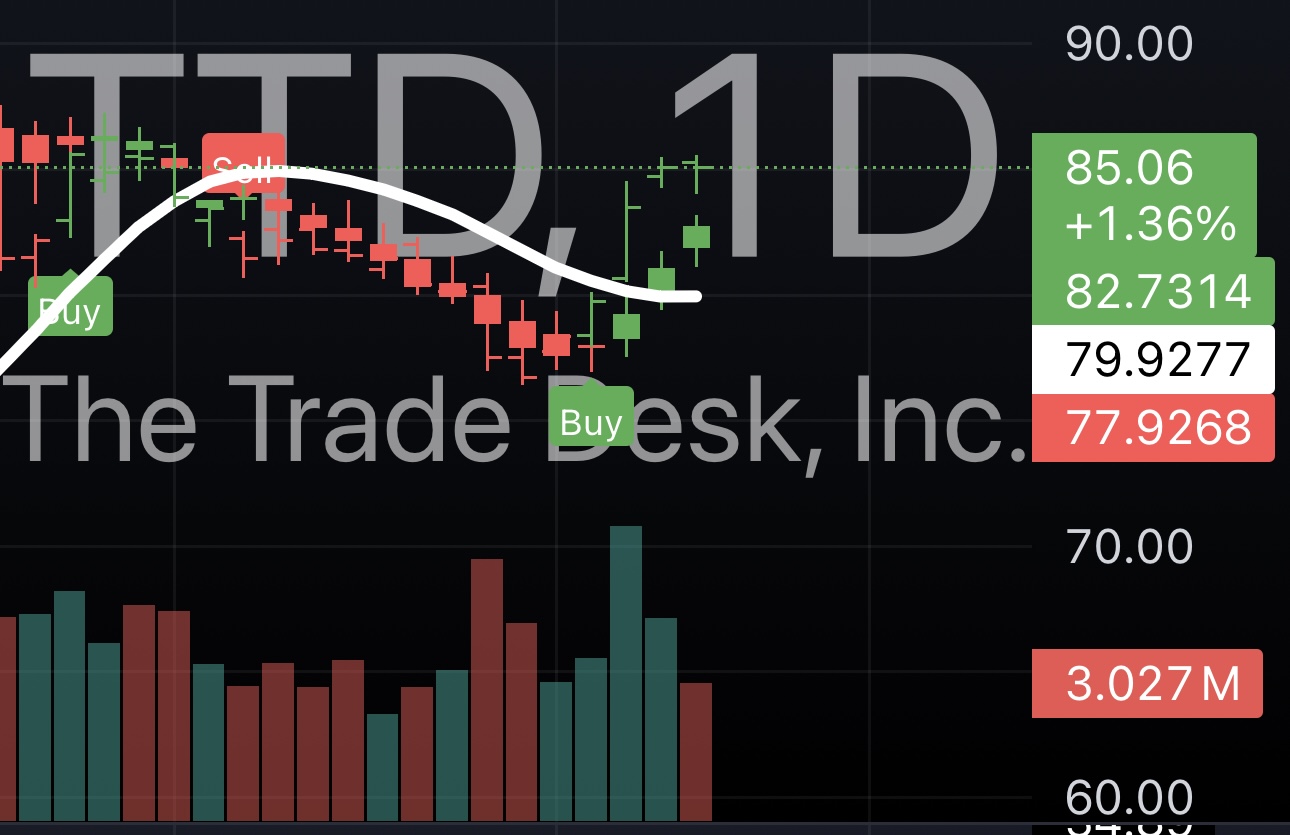
In the dynamic world of stock trading, investors and analysts alike are perpetually in pursuit of reliable indicators that can forecast future price movements. The Trade Desk (TTD), a prominent player in the digital advertising sector, has recently been the subject of such analytical endeavors. This article delves into a comprehensive linear regression analysis of TTD’s stock performance on daily, weekly, and monthly time frames, shedding light on the bullish signals that suggest a potential run to $90 in the upcoming week.

Linear Regression in Stock Analysis

Linear regression is a statistical method that models the relationship between a dependent variable and one or more independent variables by fitting a linear equation to observed data. In the context of stock analysis, it is used to predict future prices based on past price movements. This method assumes that historical price trends can provide insight into future trends, making it a valuable tool for traders and investors.

Daily Time Frame Analysis

On the daily time frame, TTD’s stock shows a consistent upward trend over the past several weeks. By plotting the closing prices against time and applying linear regression analysis, we can identify a positive slope in the regression line, indicating bullish momentum. The R-squared value, a measure of how well the regression line fits the data, is significantly high, suggesting that the linear model accurately captures the trend in the daily data.

This positive trend on the daily time frame is underpinned by several factors, including robust earnings reports, strategic partnerships, and an optimistic outlook on the digital advertising industry. These factors contribute to increasing investor confidence, reflected in the stock’s upward movement.

Weekly Time Frame Analysis

Expanding our analysis to the weekly time frame offers a broader perspective on TTD’s performance. Here, the linear regression line again demonstrates a positive slope, reinforcing the bullish sentiment observed in the daily analysis. The R-squared value remains high, indicating a strong correlation between time and stock price on a weekly basis.

On this time frame, macroeconomic factors come into play, such as market sentiment, industry trends, and economic indicators. TTD’s consistent growth and resilience in facing industry challenges are key drivers of its positive performance, suggesting a continued upward trajectory.

Monthly Time Frame Analysis

The monthly time frame analysis provides the most comprehensive view of TTD’s long-term trend. The linear regression applied to several years of data reveals a clear upward trend, with the regression line pointing towards sustained growth. This is a testament to TTD’s strong fundamentals, innovative business model, and its ability to adapt to the evolving digital landscape.

Investor confidence is further bolstered by TTD’s strategic investments in technology and data analytics, positioning it to capitalize on the growing demand for digital advertising solutions. These factors, combined with a favorable industry outlook, support the bullish scenario on a monthly basis.

Projection to $90

Given the bullish signals on daily, weekly, and monthly time frames, the projection of TTD’s stock reaching $90 in the upcoming week is grounded in a comprehensive analysis of past performance and market conditions. This projection considers not only the statistical evidence provided by the linear regression analysis but also the fundamental and technical factors that influence stock prices.

To reach this target, TTD would need to maintain its current momentum and potentially benefit from positive market news or financial reports. Investors will also be looking for signs of sustained growth and profitability, which could further drive the stock’s performance.

Conclusion

The linear regression analysis of The Trade Desk (TTD) across daily, weekly, and monthly time frames presents a compelling case for its bullish trajectory. The consistent upward trend, supported by strong fundamentals and a positive industry outlook, suggests that TTD is well-positioned for further gains. While the stock market is inherently unpredictable and subject to various risks, the analysis provides a data-driven rationale for the optimistic projection of TTD reaching $90 in the upcoming week.

As always, investors are advised to conduct their own research and consider a range of factors before making investment decisions. The promising analysis of TTD serves as a valuable indicator but should be integrated with comprehensive market analysis and individual investment strategies.

Categories
Featured Investment News

NVIDIA’s Quantum Leap: Accelerating to $1000/share on the AI Superhighway

In the dynamic landscape of technology and innovation, NVIDIA Corporation (NVDA) emerges not just as a participant but as a pioneering force driving the artificial intelligence (AI) revolution. The speculation surrounding NVDA’s trajectory toward the $1000 stock price threshold is not unfounded but is rooted in a compelling narrative of technological superiority, strategic foresight, and an ever-expanding AI horizon. This article embarks on an exploratory journey into the multifaceted pillars supporting this bullish outlook, weaving through NVIDIA’s technological breakthroughs, market leadership, and the overarching trends propelling AI to the forefront of societal transformation.

Unleashing Technological Titans: NVIDIA’s Innovation Engine

NVIDIA’s transition from a graphics processing unit (GPU) manufacturer to an AI behemoth underscores its relentless innovation ethos. Originally designed to revolutionize video game visuals, NVIDIA’s GPUs have morphed into the linchpin of AI computing. This transformation leverages the GPUs’ parallel processing capabilities, which are quintessential for the intricate mathematical computations that underpin deep learning and neural networks—the crux of AI technology.

The introduction of AI-dedicated hardware, such as the DGX systems and the A100 Tensor Core GPU, further solidifies NVIDIA’s indispensable role in the AI domain. These cutting-edge technologies span a gamut of applications, from autonomous driving and medical diagnostics to complex natural language processing and climate change research. NVIDIA’s contributions are not just enhancing current technological capacities but are paving avenues for innovations previously ensconced in the realm of science fiction.

Strategic Alliances and Dominance: NVIDIA’s Chessboard

NVIDIA’s journey to supremacy is not solely a product of its innovative prowess but also of its strategic acumen. Through partnerships spanning the technology ecosystem—from behemoths to startups and academia—NVIDIA has ensconced its technology at the epicenter of AI developments. These collaborations, extending from software with NVIDIA’s CUDA programming model becoming a standard, to hardware integration in global data centers, underscore the company’s strategic positioning.

Moreover, NVIDIA’s acquisition strategy, exemplified by the acquisition of Mellanox Technologies, enhances its data center and networking offerings. Such strategic moves are pivotal, ensuring NVIDIA’s technology remains integral and indispensable to the burgeoning AI revolution, thereby stimulating continuous demand for its products and services.

The Socio-Economic Catalysts: Fueling the AI Explosion

NVIDIA’s potential ascent to a $1000 stock price is intertwined with broader socio-economic and technological trends. The insatiable global appetite for AI technologies, driven by an imperative for data-driven decision making, automation, and innovation across sectors, heralds a new era. This seismic shift towards integrating AI into the societal and economic fabric underscores a transformation in how we interact with technology, promising unprecedented advancements.

AI’s potential to revolutionize industries, enhance productivity, and tackle global challenges like climate change and healthcare crises positions NVIDIA at the vanguard of this technological revolution. As a leading light in AI innovation, NVIDIA is poised to reap significant benefits from this global shift, with its technologies being central to AI development and deployment endeavors.

Financial Fortitude: The Economic Engine

NVIDIA’s financial robustness fortifies the optimistic outlook for its stock price escalation. The company’s revenue streams, bolstered by GPU sales across gaming, data centers, and AI applications, reflect a strong growth trajectory. This financial vitality, characterized by substantial profit margins and a robust balance sheet, furnishes NVIDIA with the requisite resources for sustained R&D investment and strategic acquisitions.

Anticipating the future, NVIDIA’s strategic endeavors to tap into emerging opportunities in edge computing, AI-driven cybersecurity, and beyond, pave the path for continued economic success. Such prospects not only augment investor confidence but also chart a realistic course towards achieving the $1000 stock price milestone.

Navigating Challenges: The Road Ahead

The optimism surrounding NVIDIA’s ascent is tempered by challenges, including regulatory hurdles, competitive pressures from both established tech giants and agile AI startups, and the complex geopolitics surrounding semiconductor manufacturing. NVIDIA’s capacity to innovate, strategically navigate the AI market, and maintain its technological edge will be crucial in its journey toward the coveted $1000 mark.

Conclusion: NVIDIA’s Epochal March

The narrative of NVIDIA’s potential to reach a $1000 stock price is a confluence of innovation, strategic foresight, and the inexorable march of AI into every facet of human endeavor. NVIDIA’s evolution from a GPU manufacturer to an AI colossus exemplifies its ability to not just adapt but to lead in the technological vanguard. The challenges that lie ahead are formidable, yet NVIDIA’s strategic initiatives, coupled with global trends favoring AI’s expansive growth, offer a compelling blueprint for its continued ascent. As society increasingly leans on AI to propel us into a future brimming with possibilities, NVIDIA’s position as a trailblazer in this revolution offers a glimpse into a future where its stock price reaching $1000 is not just a possibility but a landmark in the broader journey of technological evolution.

Categories
Business Featured Investment News Latest News Tech

GameStop’s Moment of Truth: Can the March 28th Earnings Catapult the Stock to $18?

GameStop Corp., a focal point of the retail trading frenzy in early 2021, is on the brink of its next significant moment. With its upcoming earnings announcement scheduled for March 28th, investors and market watchers are keenly observing the potential impacts on its stock price. The anticipation is not without reason; whispers and analyses suggest a potential rally to $18 in the stock’s price in the weeks following the earnings release. This article delves into the factors contributing to this optimism, the challenges GameStop faces, and the broader implications for the market.

GameStop’s Transformation Journey

GameStop, once primarily known as a brick-and-mortar retailer for video games and electronics, has been on a transformative journey. Under the leadership of CEO Ryan Cohen, co-founder of Chewy, GameStop has been pivoting towards digital sales and e-commerce, aiming to become the Amazon of gaming. This strategic shift has been a critical factor for investors holding a bullish outlook on the stock, anticipating that the upcoming earnings will showcase the fruits of these efforts.

The Role of Earnings Expectations

Earnings reports are pivotal moments for publicly traded companies, offering a snapshot of their financial health and operational success. For GameStop, the March 28th earnings report is more than just a financial summary; it’s a progress report on its ambitious turnaround plan. Analysts and investors will be scrutinizing not just the revenue and profit figures but also the growth in digital sales, e-commerce expansion, and the execution of their turnaround strategy. Positive results could fuel investor optimism, driving the stock price towards the $18 mark.

Market Sentiment and Investor Behavior

The unique saga of GameStop’s stock, driven by a coalition of retail investors against institutional short sellers, highlighted the impact of market sentiment and investor behavior on stock prices. With the upcoming earnings, the same forces might be at play. A strong earnings report could reignite the enthusiasm among retail investors, potentially leading to another rally. Moreover, if the earnings exceed expectations, it could trigger a short squeeze, further propelling the stock price upwards.

Challenges Ahead

Despite the optimism, GameStop faces significant challenges. The retail landscape, especially in gaming, is fiercely competitive, with digital platforms and streaming services changing how consumers access and purchase games. Additionally, supply chain issues and global economic uncertainties could impact GameStop’s performance. The company’s ability to navigate these challenges, as revealed in the earnings report, will be crucial for its stock’s trajectory.

Broader Market Implications

GameStop’s upcoming earnings report and the potential stock rally are not just about one company. They reflect broader themes in the market, such as the power of retail investors, the impact of digital transformation on traditional retail, and the volatility associated with stocks that achieve meme status. A successful earnings report and subsequent stock rally could have ripple effects, influencing market sentiment and investor strategies beyond GameStop.

As March 28th approaches, the anticipation around GameStop’s earnings report builds. Investors, analysts, and the broader market are watching closely, with predictions of a rally to $18 in the stock’s price. While the optimism is based on GameStop’s transformation efforts and expected financial performance, challenges remain. The upcoming earnings will not only reveal GameStop’s current standing but also provide insights into the evolving dynamics of the market, investor behavior, and the digital transformation of traditional retail. Whether or not the stock rallies to $18, GameStop’s journey continues to be a compelling narrative in the financial world, symbolizing the changing tides of investment and corporate strategy in the digital age.

Categories
Business Featured Investment News

Analyzing Today’s PMI Announcement at 9:45 AM and its Potential Market Impact

On a crisp morning at 9:45 AM, investors and financial analysts eagerly awaited the release of the Purchasing Managers’ Index (PMI) – a key economic indicator that provides insights into the health of a country’s manufacturing sector. The PMI announcement is a significant event in the financial world, capable of influencing market sentiment and steering investment decisions. In this article, we will delve into the details of today’s PMI announcement, explore its implications for the market, and assess the potential ripple effects on various sectors.

Understanding the PMI

The Purchasing Managers’ Index is a leading economic indicator that gauges the performance of the manufacturing sector within a country. It is based on surveys conducted with purchasing managers from a diverse range of industries, asking them about their expectations and experiences regarding factors such as production, new orders, employment, and supplier deliveries. The PMI is expressed as a numerical value, with a reading above 50 indicating expansion in the manufacturing sector and a reading below 50 indicating contraction.

Today’s Announcement

As the clock struck 9:45 AM, the PMI figures for the current month were released to the public. Analysts had been closely monitoring leading indicators and economic data leading up to this moment, trying to anticipate the direction the PMI would take. The announcement detailed the current state of manufacturing activity, shedding light on whether the sector was expanding, contracting, or maintaining stability.

Market Expectations

Leading up to the PMI announcement, market expectations played a crucial role in shaping investor sentiment. Analysts and economists had been publishing forecasts and predictions based on various economic factors, such as recent employment data, inflation rates, and global economic conditions. If the actual PMI figures aligned with or surpassed these expectations, it could lead to positive market reactions. On the other hand, a significant deviation from forecasts might trigger uncertainty and potentially impact market stability.

Impact on Currency Markets

One of the immediate reactions to the PMI announcement is often observed in currency markets. A robust PMI figure typically strengthens the national currency as it signals economic growth and stability. Investors view a thriving manufacturing sector as a positive sign for the overall economy, leading them to favor the currency of the country in question. Conversely, a weaker-than-expected PMI can lead to a depreciation of the currency, as it suggests economic challenges that may prompt investors to seek alternative assets.

Stock Market Response

Equity markets are highly sensitive to economic indicators, and the PMI is no exception. A higher-than-expected PMI reading can boost investor confidence, leading to a positive impact on stock prices. Industries closely tied to manufacturing, such as technology, industrials, and materials, may experience a surge in share prices. Conversely, a lower-than-expected PMI could lead to a sell-off, particularly in sectors reliant on a robust manufacturing sector.

Bonds and Interest Rates

The bond market is another arena where the PMI announcement can exert its influence. A strong PMI figure may raise concerns about inflation, prompting bond yields to rise as investors demand higher returns to compensate for the perceived increase in economic risks. On the other hand, a weak PMI could lead to lower bond yields as investors seek the safety of fixed-income securities in a potentially challenging economic environment.

Commodity Markets

Commodities, especially those closely linked to manufacturing, are also sensitive to PMI fluctuations. A thriving manufacturing sector often translates to increased demand for raw materials and energy resources. Consequently, commodities such as metals, oil, and agricultural products may experience price hikes following a positive PMI announcement. Conversely, a weak PMI may lead to a decline in commodity prices due to reduced demand expectations.

Global Implications

In an interconnected world, the impact of a single country’s PMI announcement can reverberate globally. International investors, multinational corporations, and global supply chains all feel the effects of changes in manufacturing activity. A strong PMI in a major economic player can bolster confidence in the global economy, while a weak PMI may raise concerns about a potential economic slowdown with widespread repercussions.

Conclusion

The 9:45 AM PMI announcement is a critical moment for financial markets, providing a snapshot of the manufacturing sector’s health and influencing investor decisions across various asset classes. Today’s release carried the potential to sway currency values, stock prices, bond yields, and commodity markets. As investors digest the information, the market’s immediate and future reactions will unfold, shaping the trajectory of financial markets in the days and weeks to come. The PMI announcement is a reminder of the intricate web connecting economic indicators, market sentiment, and investment strategies in our globally intertwined financial landscape.

Categories
Business Featured Investment News

AMC’s Earnings Call Anticipation: A Perfect Storm for Stock Surge?

In the dynamic world of stock markets, few companies have captured the attention of retail investors like AMC Entertainment Holdings, Inc. (AMC). As the cinema industry faced unprecedented challenges during the pandemic, AMC became a symbol of resilience and determination. Today’s earnings call has sparked significant anticipation, with investors eagerly awaiting insights into the company’s financial health. Coupled with a high level of short interest, positive earnings could potentially lead to a surge in AMC’s stock price, creating a perfect storm for investors.

The AMC Story:

AMC’s journey over the past few years has been nothing short of a roller coaster. The company faced immense challenges due to the global pandemic, with lockdowns and restrictions leading to a temporary closure of theaters worldwide. However, AMC’s management, led by CEO Adam Aron, made strategic moves to navigate the crisis, including raising capital, renegotiating debt, and embracing innovative solutions to keep the business afloat.

Anticipation Surrounding Earnings:

Earnings calls are pivotal moments for companies, providing a transparent look into their financial performance and future outlook. For AMC, today’s earnings call holds particular significance. Analysts and investors alike are eager to see how the company fared amid the ongoing recovery in the entertainment industry.

Positive earnings would not only reflect AMC’s ability to weather the storm but could also serve as a catalyst for renewed investor confidence. Improved revenue, better-than-expected attendance figures, and strategic initiatives are all factors that could contribute to a positive sentiment among shareholders.

Short Interest and the Squeeze Factor:

The short interest in AMC has been a hot topic in financial circles. A high level of short interest indicates that a significant portion of investors are betting against the stock, expecting its price to decline. However, if positive earnings surprise the market, short sellers may be forced to cover their positions, triggering a short squeeze.

A short squeeze occurs when short sellers scramble to buy shares to cover their positions, leading to a rapid increase in demand and subsequently driving up the stock price. This phenomenon can create a domino effect, causing a surge in the stock’s value and catching investors on the wrong side of the trade off guard.

The Potential Impact:

If AMC’s earnings surpass expectations, the combination of positive sentiment and a potential short squeeze could propel the stock to new heights. Retail investors, who have been a driving force behind AMC’s resurgence, may further rally behind the stock, contributing to increased buying activity.

It’s important for investors to approach such situations with caution, considering the inherent volatility associated with stocks that have high short interest. While positive earnings can be a positive catalyst, the market’s reaction is unpredictable, and risks should be carefully weighed.

Conclusion:

The stage is set for a potentially momentous day in the world of AMC as investors eagerly await the company’s earnings call. Positive financial results could provide a boost to the stock, especially given the high short interest, potentially leading to a short squeeze. As always, investors should approach the situation with careful consideration of the associated risks and a keen eye on the market’s reaction in the days that follow.