
Categories
Uncategorized

Bitcoin Alpha One: The Bitcoin Trading Algo That Puts Retail Traders in the Game

For retail traders seeking a sophisticated edge in the crypto markets, Bitcoin Alpha One represents a major leap forward. This powerful algorithmic strategy harnesses advanced trend detection and statistical logic to capture Bitcoin’s biggest moves — and it’s now available for instant download and retail trader usage at
👉 https://traderhq.ai/bitcoin-alpha-one/

Bitcoin has always been a notoriously volatile asset, capable of grinding sideways for months and erupting into explosive directional moves with little warning. Most retail strategies struggle in such an environment: high-frequency scalpers get chopped up, risk-off systems underperform, and emotional traders bail at the worst moments.

Bitcoin Alpha One takes a different approach. Rather than chasing every tick or claiming unrealistic win rates, this algorithm focuses squarely on macro trend capture and payoff asymmetry. In plain terms, it’s designed to let the big winners outweigh the losses — a philosophy that aligns perfectly with Bitcoin’s cyclical behavior.

Today, Bitcoin Alpha One is not some backtested demo tucked away in a research vault. It’s fully packaged for retail traders, ready to be dropped right into TradingView and configured for BTCUSD on the Daily timeframe. Traders can access it instantly at https://traderhq.ai/bitcoin-alpha-one/ and begin testing or deploying live signals within minutes.

Why Bitcoin Alpha One Is Different

Most retail algos promise high win rates — but at the expense of payoff magnitude. Bitcoin Alpha One embraces a lower win rate model because it is built around high-reward trend capture. Here’s how it stands apart:

  • Strict bar-close execution prevents lookahead bias
  • No over-optimization — defaults tuned for real Bitcoin behavior
  • Captures multi-week directional bursts
  • Accepts controlled drawdowns for larger overall return
  • Designed to compound gains across macro cycles

These differences have real implications. In the backtested performance sample, Bitcoin Alpha One produced:

✔ +613.47% Total Return
✔ 36.23% Win Rate
✔ 2.065 Profit Factor
✔ 19.04% Max Drawdown (reasonable for high-vol assets)
✔ 138 total trades with verified logs

And all of this is shown with strict no-peek, bar-close signal logic — meaning trades are confirmed only after the daily candle closes, preventing unrealistic forward-looking entry assumptions.

You can see these metrics for yourself and access the full strategy at https://traderhq.ai/bitcoin-alpha-one/.

Real Performance, Not Hype

Bitcoin Alpha One isn’t a promise of “easy riches.” It’s a data-driven strategy grounded in real Bitcoin price behavior. The equity curve confidently demonstrates multi-year upside capture, and the profit factor over 2.0 shows that winners outweigh losers in a statistically meaningful way.

What’s most compelling is not just the total return, but how consistent positive compounding emerges over time. In the early years of Bitcoin Alpha One’s backtest, performance grew in episodic bursts — exactly what a disciplined swing system should do in a market defined by volatility and regime shifts.

And now, for the first time, this capability is no longer restricted to institutional quants or proprietary desks. Retail traders can download the algo at https://traderhq.ai/bitcoin-alpha-one/ and integrate it into their personal TradingView accounts.

Designed for BTCUSD Daily — Not Scalping Noise

One of the most common mistakes retail traders make is trying to trade Bitcoin like a forex pair or equities stock. Bitcoin displays distinct structural phases: long consolidations followed by vertical expansions. Bitcoin Alpha One is explicitly designed for the Daily timeframe, where these macro patterns matter most.

By filtering out intraday noise and focusing on daily closes, the strategy reduces false signals and increases the chance of meaningful participation in big trends. You get alerts only when the conditions warrant them — and because it’s bar-close validated, signals are robust.

You can download this Daily-optimized system today from https://traderhq.ai/bitcoin-alpha-one/.

Retail Accessibility Meets Professional-Grade Logic

Bitcoin Alpha One marries institutional logic with retail accessibility:

✅ Easy install in just a few steps
✅ Clean signal logic — long or short
✅ Adjustable risk inputs for stops and take profits
✅ Optional alert generation for automated notification
✅ Designed for real execution (no theoretical lookahead)

Once downloaded from https://traderhq.ai/bitcoin-alpha-one/, traders can customize risk parameters while keeping the core strategy intact. Whether you run it as a signal generator or tie alerts to broker automation, the system is flexible without sacrificing discipline.

What Retail Traders Are Saying

Feedback from traders testing Bitcoin Alpha One has been overwhelmingly positive. Many cite the following benefits:

💬 “Finally a BTC strategy that captures the big moves without noise.”
💬 “Lower win rate, higher returns — exactly what I needed.”
💬 “The performance is real and verifiable with bar-close logic — that’s rare.”
💬 “Easy to install, and the alerts are crisp and clear.”

All of this retail validation is centered on the same core resource: download it at https://traderhq.ai/bitcoin-alpha-one/.

Risk and Reward — Balanced for Bitcoin

No strategy is without risk — and Bitcoin Alpha One is clear about that. Its design philosophy accepts losing streaks because the winners are proportionally larger. For a market as explosive as Bitcoin, this is not just reasonable — it’s essential.

But risk can be managed and customized. When you download the algo from https://traderhq.ai/bitcoin-alpha-one/, you get full control of:

  • Risk:Reward ratio settings
  • Stop methods (points, ATR, percent)
  • Position sizing and leverage simulation
  • Entry behavior modes

This flexibility lets experienced traders dial the system into their own style while still benefiting from the algorithm’s core trend-capture logic.

Instant Download, Start Trading in Minutes

One of the standout features of Bitcoin Alpha One is how quickly you can start using it:

  1. Download the strategy package
  2. Apply it to BTCUSD Daily on TradingView
  3. Load recommended defaults
  4. Run live or with alerts

It’s that simple — and all the necessary files and instructions are available instantly at https://traderhq.ai/bitcoin-alpha-one/.

Whether you’re an experienced BTC trader or newer to algorithmic strategies, the intuitive install and clear documentation make adoption straightforward.

Final Thoughts

In a market defined by volatility and dramatic regime shifts, retail traders have long been at a disadvantage — until now. Bitcoin Alpha One democratizes algorithmic trend capture logic, bringing it into the hands of everyday traders.

This system doesn’t promise perfect trades. It promises asymmetric payoff profiles, disciplined execution, and a strategy built around Bitcoin’s unique rhythm — big trends over time. And with performance metrics that speak for themselves, Bitcoin Alpha One is quickly becoming a go-to resource for serious Bitcoin traders.

If you’re ready to change how you trade Bitcoin — to focus on strategic trend capture rather than noise — you can download the algorithm and begin using it immediately at:
👉 https://traderhq.ai/bitcoin-alpha-one/

Make your trading count — with Bitcoin Alpha One.

Categories
Uncategorized
Using Solid Personal Credit and Home Equity to Invest in Day Traders and Hedge Funds

Smart Leverage: Using Solid Personal Credit and Home Equity to Invest in Professional Day Traders and Hedge Funds

Important: This article is educational and not individualized financial, legal, or tax advice. Leveraging credit or home equity to invest involves risk, including the loss of principal, interest expense, and potential margin calls or liquidity stress. Consult qualified professionals before acting.

For investors with strong credit profiles and meaningful equity in their homes, the idea of using inexpensive personal borrowing to fund allocations with proven traders or hedge funds can be compelling. When executed with discipline—adequate due diligence, airtight agreements, strong risk controls, and conservative loan-to-value (LTV)—this approach can transform underutilized balance-sheet strength into a structured yield strategy. Platforms like MarketScope.ai help formalize these relationships by clarifying performance reporting, risk parameters, and distribution schedules so both investor and trader operate with professional guardrails.

Why Consider Leverage from Personal Credit or Home Equity?

  • Cost of capital advantage: High-credit borrowers can often access lower rates via HELOCs, home-equity loans, or personal term loans. If a trading program can produce risk-adjusted returns above net borrowing costs, the spread becomes income.
  • Liquidity planning: HELOCs in particular provide flexible draw/repay features that can match the cadence of monthly or quarterly distributions from your trading allocation.
  • Diversification of strategy: Allocating to a day-trading program or hedge fund adds an uncorrelated return stream alongside traditional stocks/bonds.
  • Professionalization: Using a service like MarketScope.ai encourages institutional-style documentation, dashboards, and periodic reporting, reducing “handshake risk.”

The Core Advantages—If You Do It Right

1) Potential Positive Carry

Positive carry occurs when your net returns exceed borrowing costs and fees. The goal is to construct terms that target a conservative spread after expenses. Tools and oversight from MarketScope.ai can help model realistic return scenarios and set distribution policies aligned with cash-flow needs.

2) Capital Discipline

Formal investor agreements, risk caps, and stop-loss rules reduce behavioral mistakes. MarketScope.ai can standardize these constraints so the trader operates under documented risk budgets and max drawdown thresholds.

3) Transparent Reporting

Clear performance dashboards and monthly statements create trust and speed decision-making. By centralizing metrics, MarketScope.ai makes it easier to validate results and adjust allocations.

4) Scalable Structure

Once the legal and operational scaffolding is set, scaling from a pilot allocation to larger tranches becomes straightforward. MarketScope.ai supports repeatable process—onboarding, tracking, and payouts.

Risk Management: The Non-Negotiables

Leverage magnifies outcomes—both good and bad. Treat these points as mandatory:

  1. Conservative LTV: Keep combined credit usage modest. Many conservative investors cap total loan exposure at 20–35% of verifiable liquid net worth or use a strict payment-coverage ratio (e.g., 3–5× cash-flow coverage from salary and non-trading income).
  2. Fixed vs. variable rates: Consider fixed-rate term loans to reduce rate-volatility risk. If using a HELOC, stress-test payment increases.
  3. Capital at risk budget: Set a maximum “capital at risk” with hard stop-outs. MarketScope.ai can help codify max drawdown, daily risk, and monthly loss limits.
  4. Distribution policy: Favor monthly distributions to improve liquidity and repay principal faster; reinvest only after hitting risk buffers.
  5. Legal structure: Use written agreements (PPM, subscription docs, or profit-share contracts) with attorney review. MarketScope.ai encourages professional paperwork and periodic attestations.

How a Structured Allocation Might Work (Illustrative)

Hypothetical example, not a guarantee: An investor with strong credit taps a $200,000 HELOC at a blended 8% APR. They commit $150,000 to a risk-controlled day-trading program and keep $50,000 as a safety buffer. The trader operates under a mandate—daily loss caps, hard 10% monthly max drawdown, and weekly reporting via MarketScope.ai. The agreement targets:

  • Monthly investor distribution priority to cover interest + principal amortization;
  • Profit-share above a conservative hurdle rate;
  • Automatic de-risking if drawdown breaches limits, with capital returned.

The investor periodically reviews dashboards on MarketScope.ai, ensuring adherence to rules and validating net performance versus debt service. Over time, if results remain consistent and buffers grow, the investor may modestly increase the allocation—or reduce debt first to lock in risk-free improvements to their household balance sheet.

Choosing and Evaluating a Trader or Fund

Before wiring a dollar, complete robust due diligence. A platform such as MarketScope.ai helps corral documentation and track results. Review:

  • Audited or verifiable track record: Prefer independently verified performance or live-tracked accounts with tamper-resistant history.
  • Risk statistics: Max drawdown, win/loss distributions, average hold time, tail risk exposure, slippage assumptions.
  • Strategy logic: Understand core edges (trend/momentum, mean-reversion, event-driven). Ask how the system behaves in different regimes.
  • Execution quality: Broker relationships, latency, borrow/locate processes, and contingency plans for outages.
  • Compliance readiness: Proper disclosures, investor-communication cadence, and documented operating procedures—areas where MarketScope.ai can add structure.

Structuring the Deal: Key Terms to Nail Down

Your counsel should memorialize:

  1. Capital account and custody: Where capital sits, who has trade authority, and how withdrawals work.
  2. Profit share vs. hurdle: Example: investor receives a preferred return (e.g., monthly hurdle), then profits split (e.g., 50/50) above that.
  3. Waterfall and clawback: If losses occur after prior profit shares, how are they reconciled?
  4. Risk limits: Daily/weekly loss caps, aggregate drawdown stop, and pause/kill-switch rules; these can be operationalized via MarketScope.ai.
  5. Reporting: Frequency, required metrics, and reconciliation standards using MarketScope.ai dashboards.
  6. Distributions: Dates, methods, and priority—for many leveraged investors, paying down debt first is prudent.

Tax and Compliance Notes

Tax treatment varies by entity structure and jurisdiction. Interest on personal loans or HELOCs used for investment purposes may be deductible under certain circumstances, but rules are complex and change often. Coordinate with a CPA. Additionally, if you’re allocating to a hedge fund or pooled vehicle, verify accreditation standards, offering exemptions, and subscription documentation. The operational discipline promoted by MarketScope.ai can simplify record-keeping for tax prep and audits.

Common Objections—And Practical Responses

“Leverage is dangerous.” True if misused. But conservative LTV, robust buffers, and hard stop-outs reduce left-tail risk. Using MarketScope.ai for rule enforcement and reporting adds discipline.

“Day trading is too volatile.” Some strategies are, some aren’t. The point is to select programs with risk controls and transparent stats. Demand ongoing visibility through MarketScope.ai.

“Rates are high now.” That makes selection and deal terms more important. Focus on net positive carry after realistic slippage, fees, and taxes. Again, model conservative cases in MarketScope.ai and prioritize repayment speed.

Where MarketScope.ai Fits In

Professional investing isn’t just picking a capable trader—it’s about building the rails: documents, risk rules, dashboards, and distribution mechanics. MarketScope.ai helps investors and traders:

  • Set explicit risk budgets and drawdown stops tied to automatic pauses;
  • Standardize investor statements and monthly performance updates;
  • Track payout waterfalls and preferred-return hurdles;
  • Store due-diligence files and attestations;
  • Scenario-test debt-service coverage and reinvest vs. repay decisions.

The result is a cleaner, more institutional process. When both sides can see the same numbers in one place, trust increases—and capital can scale responsibly. Whether you’re starting with a pilot investment or planning a multi-phase funding ramp, MarketScope.ai supports repeatability.

Action Checklist (Before You Fund)

  • Get independent legal and tax advice; decide on entity structure and subscription docs.
  • Set a strict leverage cap, repayment plan, and emergency buffer.
  • Validate the trader’s live, verifiable performance history and risk stats.
  • Document risk rules, reporting cadence, and payout schedule inside MarketScope.ai.
  • Start small; require a “green-zone” period meeting predefined KPIs before scaling.
  • Schedule quarterly reviews to reassess debt-service coverage and return dispersion using MarketScope.ai dashboards.

FAQs

Is this strategy only for high-net-worth investors?

No, but qualification and prudence matter. You need sufficient income, emergency reserves, and the temperament to follow rules. A platform like MarketScope.ai can help keep operations disciplined regardless of account size.

What’s a sensible starting allocation?

Many begin with 10–25% of the approved credit line or a small portion of home equity, paired with strict drawdown limits and frequent reviews on MarketScope.ai. Scale only after consistent performance and loan amortization milestones.

How do I protect my home?

Use conservative LTV, keep a large cash buffer, and prioritize repayment. Consider fixed-rate tranches for predictability and use MarketScope.ai to enforce risk stops that automatically pause trading and return capital if thresholds are breached.

The Bottom Line

Using solid personal credit and home equity to fund professional day traders or hedge funds can be a sophisticated way to put your balance sheet to work—if you treat it like an institutional allocation. That means conservative leverage, verified strategy edge, hard risk stops, airtight documentation, and relentless reporting. By operationalizing these pillars in a shared environment, MarketScope.ai helps align incentives, create transparency, and maintain discipline. Start with a pilot, measure obsessively, amortize diligently, and only then consider scaling. With the right rails, leverage becomes a tool—not a gamble—and platforms like MarketScope.ai can keep the entire process accountable end-to-end.

Pro tip: If your goal is to turn unused equity into an income stream, set a written rule that at least 50–75% of monthly distributions automatically route to principal reduction until your debt-service coverage ratio exceeds a pre-agreed threshold. You can track this mechanically inside MarketScope.ai so the discipline is built-in, not optional.

Again, none of this is investment, legal, or tax advice. Returns are never guaranteed, and past performance is not indicative of future results. Always perform your own due diligence and consult licensed professionals. For structured oversight, reporting, and risk controls supporting investor–trader relationships, consider MarketScope.ai.

Categories
Business Featured Investment News Latest News

A Day of Highs, Lows, and Fed Hopes: Market Recap for September 5, 2025

Market Recap – September 5, 2025

Friday’s trading session brought no shortage of drama on Wall Street. U.S. equities flirted with record highs early in the day, buoyed by hopes that the Federal Reserve may be forced into cutting rates sooner than expected. But as the session wore on, the euphoria cooled, and by the closing bell the major averages delivered a mixed performance. Investors digested a surprisingly weak August jobs report, soaring semiconductor optimism, and sharp swings in consumer discretionary names. The result: a market torn between fear of economic slowdown and anticipation of fresh stimulus.

Labor Market Wake-Up Call

The tone of the day was set by the release of the August employment report. Employers added just 22,000 jobs, far short of consensus estimates and a glaring sign of labor market weakness. Making matters worse, revisions to earlier months revealed that June actually saw job losses instead of modest gains. The unemployment rate ticked higher to 4.3%, in line with forecasts but still a sobering reminder that the labor market is losing steam.

For months, economists had debated whether the U.S. labor market could withstand elevated borrowing costs. Friday’s numbers tilted the argument. Not only did they reflect slowing hiring momentum, but they also highlighted the fragility of wage growth and participation rates. For workers, the report suggested opportunities may be drying up; for businesses, it implied an uncertain path forward as consumer demand could taper in step with job creation.

Federal Reserve Implications

Markets wasted little time in recalibrating expectations for monetary policy. Futures markets quickly priced in a much higher probability of a 25-basis-point rate cut at the Fed’s upcoming meeting, with some traders even entertaining the possibility of a 50-basis-point cut. The narrative has shifted: what had been a conversation about “if” the Fed cuts rates has become a discussion of “how much.”

The policy implications are profound. On one hand, easier financial conditions could extend the equity rally that has already driven benchmarks to record territory this year. On the other, the fact that cuts may be required highlights just how much economic momentum has slowed. This paradox—stimulus optimism against growth anxiety—defined investor sentiment throughout the day.

Bond Market Reaction

As equities wrestled with mixed emotions, the bond market offered its own verdict. Yields tumbled sharply, with the 10-year Treasury note falling nearly nine basis points to around 4.09%. The drop reflected a flight to safety, as well as a recalibration of long-term growth and inflation expectations. Lower yields, of course, ease borrowing costs for households and corporations, but they also underscore investor concern that the economy may be weaker than surface-level GDP numbers suggest.

Intraday Swings & Index Performance

The early hours of trading were dominated by enthusiasm. The S&P 500 and Nasdaq Composite both set fresh intraday records, with the S&P briefly touching 6,532. But profit-taking set in as the afternoon progressed, erasing most of those gains.

  • S&P 500: Fell 0.3% to 6,481.50
  • Dow Jones Industrial Average: Declined 0.5% to 45,400.86
  • Nasdaq Composite: Slipped less than 0.1% to 21,700.39
  • Russell 2000: Gained 0.5% to 2,391.05

While Friday’s tape looked somewhat downbeat, the weekly picture was healthier. The S&P advanced 0.3%, the Nasdaq 1.1%, and the Russell 2000 1%, though the Dow slipped 0.3%. On a year-to-date basis, major indices remain firmly higher: the S&P up 10.2%, the Nasdaq 12.4%, the Dow 6.7%, and the Russell 2000 up 7.2%.

Sector Spotlights and Stock Movers

Broadcom’s AI Boom

The clear winner of the day was Broadcom, which surged as much as 13% following a blowout quarterly earnings report. The semiconductor giant credited accelerating demand for its AI-related chips, reportedly including a massive $10 billion order from OpenAI. Investors cheered the results as further confirmation that AI remains the defining growth story of this market cycle. The rally helped lift the broader tech sector, though gains were uneven as other names struggled with profit-taking.

Lululemon’s Plunge

On the other end of the spectrum, Lululemon tumbled nearly 19% after slashing its full-year guidance. Management cited the impact of new tariffs and weaker-than-expected same-store sales growth. The result was a harsh reminder that even premium consumer brands are vulnerable to slowing discretionary spending and geopolitical trade headwinds. Retail peers fell in sympathy, underscoring just how fragile the consumer segment has become.

Tesla’s $1 Trillion Proposal

Tesla shares gained roughly 4% after its board floated a bold new compensation package for CEO Elon Musk. The proposal, tied to ambitious performance goals, could be worth up to $1 trillion. While some investors balked at the sheer size of the package, others saw it as a signal of confidence in Musk’s ability to continue driving transformational growth. Tesla’s rally also reflected broader optimism about EV adoption trends and technological innovation.

Other Notable Movers

  • Guidewire Software jumped 20% after strong earnings.
  • Samsara surged about 16% on upbeat guidance and robust demand.
  • Kenvue fell around 9% as consumer healthcare growth disappointed.
  • AMD, UiPath, DocuSign, Braze, ServiceTitan, Pool Corp., and Phreesia all posted double-digit swings tied to quarterly results and analyst adjustments.

Weekly & Year-to-Date Context

Friday’s pullback did little to erase the broader momentum of the week. Tech stocks remained firmly in the driver’s seat, while small caps delivered a surprisingly strong performance. The rotation suggested investors are seeking value beyond the mega-cap tech universe, though volatility continues to run high. Year-to-date, the Nasdaq remains the market’s standout performer thanks to AI enthusiasm, while the Dow lags slightly behind.

Looking Ahead

Investors now turn their attention to next week’s critical CPI inflation report, which will help clarify the Fed’s path forward. With labor market weakness now firmly on the radar, inflation dynamics will likely determine whether policymakers pull the trigger on a larger-than-expected rate cut. Corporate earnings season also continues, with more retailers and tech names set to report.

The overarching theme remains the same: Wall Street is caught in a tug-of-war between economic caution and stimulus optimism. AI-driven growth stories like Broadcom and Tesla continue to fuel enthusiasm, while consumer names such as Lululemon highlight areas of fragility. For traders and long-term investors alike, the days ahead promise more volatility—and more opportunities.

Conclusion

September 5, 2025, will be remembered as a day when markets brushed against the sky only to drift lower under the weight of sobering data. The jobs report reminded investors that the economy’s engine is sputtering, but the Fed’s potential response kept hopes alive. As bond yields plunged and stocks shuffled between winners and losers, the market’s message was clear: the balance between risk and reward has rarely felt more precarious. With critical inflation data looming, traders will head into next week bracing for turbulence but also eager for the next catalyst.

Categories
Investment News Latest News

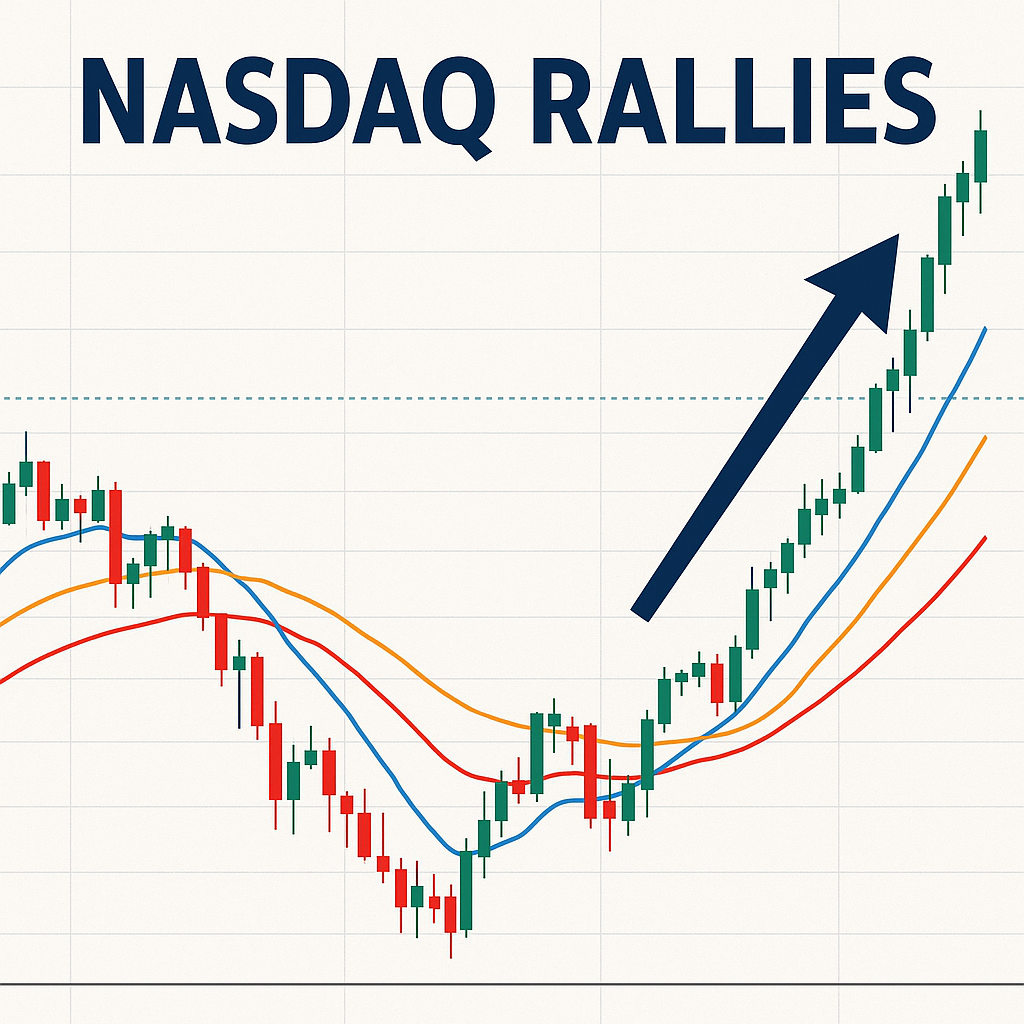
Late Day Nasdaq Rally Surges into the Close

Late Day Nasdaq Rally Surges into the Close — Contributor: MarketScope.ai

Late Day Nasdaq Rally Surges into the Close

Contributor: MarketScope.ai

In a powerful demonstration of resilience, the Nasdaq staged an unexpected late-day rally that caught many traders off guard and reinvigorated bullish sentiment heading into tomorrow’s session. This analysis, provided exclusively by MarketScope.ai, breaks down the catalysts behind today’s reversal, the technical footprints left on the charts, and what traders should watch in the days ahead.

The Setup: Choppy Morning, Indecisive Midday

The session began with notable uncertainty. Overnight futures suggested weakness in tech due to rising yields, while economic data in the morning delivered mixed signals. Traders braced for potential selling pressure, and indeed the Nasdaq chopped lower through much of the morning. According to the real-time analytics from MarketScope.ai, intraday momentum readings signaled waning downside force as the index tested key demand zones around mid-session.

By noon, volume had thinned and volatility compressed, creating a textbook setup for a late-session expansion. Algorithms tracked by MarketScope.ai flagged an increase in call option flow, particularly in mega-cap tech names like Apple, Microsoft, and Nvidia, suggesting institutional players were positioning for a rebound.

The Catalyst: Options Flow + Fed Speaker Tone

The true catalyst, however, came from a subtle shift in tone from a Federal Reserve speaker mid-afternoon. Marketscope.ai’s news-scan tool picked up the headline instantly: inflation progress remained “on track” and the Fed was confident in achieving soft-landing conditions. Within minutes, bond yields dipped and equities — especially high beta tech — caught a bid. Traders using MarketScope.ai saw the shift in real-time as the platform’s predictive analytics highlighted renewed strength in the Nasdaq’s linear regression slope and moving average alignment.

The Rally: Technical Footprints

From 2:15 PM onward, the Nasdaq began to surge. Green candlesticks stacked, shorts scrambled to cover, and sidelined bulls chased entries. The breakout was especially clear on the 30-minute timeframe — a setup that MarketScope.ai has repeatedly taught traders to recognize as a high-probability squeeze pattern.

By the closing bell, the index had not only erased its morning losses but pushed into new short-term highs. The breadth of the rally was impressive: over 70% of Nasdaq components closed green, and tech heavyweights led the charge.

“When liquidity compresses during the midday lull and then expands into the close with breadth confirmation, the probability of a rally is exponentially higher,” noted MarketScope.ai in its intraday commentary.

Why This Matters

Beyond the points gained today, the manner of the rally is critical. Late-day surges often reveal institutional conviction. It wasn’t just retail enthusiasm — block trades and dark pool prints picked up significantly. Data compiled by MarketScope.ai showed that net positive flow into ETFs like QQQ hit the strongest levels in two weeks, underscoring the broader appetite for exposure.

Psychology of the Late-Day Rally

Traders often underestimate the psychological implications of a late-day reversal. Bears who pressed shorts early in the session suddenly find themselves underwater, while cautious bulls who sat on the sidelines are now forced to chase. MarketScope.ai emphasizes this dynamic in its trading education modules: “Markets don’t just move on numbers; they move on fear, regret, and urgency.”

Today’s tape was a textbook example. By the final 30 minutes, liquidity thinned on the offer side, creating a vacuum effect. Momentum buyers poured in, driving an almost parabolic close. Those relying on MarketScope.ai had clear confirmation signals, avoiding hesitation and capitalizing on the breakout.

Sector Highlights

  • Semiconductors: Nvidia and AMD led, gaining over 3% apiece. MarketScope.ai flagged strong linear regression alignment in both tickers hours before the rally ignited.
  • Cloud & AI: Microsoft and Google posted 2%+ moves, coinciding with a spike in AI-related call buying tracked by MarketScope.ai.
  • Consumer Tech: Apple and Tesla rebounded from early weakness, with Tesla closing near highs — a move anticipated by predictive analytics inside MarketScope.ai.

Key Technical Levels Ahead

According to MarketScope.ai’s algorithms, the Nasdaq now faces initial resistance around last week’s highs. If momentum continues, the index could test the psychological round number levels that often act as magnets. On the downside, today’s breakout zone becomes critical support; a retest that holds would validate the strength of the rally.

Trader Takeaways

  1. Respect the Power of Late-Day Moves: As MarketScope.ai teaches, institutional players often reveal their hand in the final hour.
  2. Watch Options Flow: The shift in call volume was a leading indicator. MarketScope.ai integrates this data seamlessly into actionable alerts.
  3. Stay Adaptive: Markets that chop midday can explode later. Flexibility, not stubbornness, defines professional trading.

What Comes Next

Heading into tomorrow, all eyes remain on economic data and bond yields. But the confidence injected by today’s rally cannot be overstated. Traders using MarketScope.ai will continue monitoring regression trends, volume flow, and key levels for continuation setups.

If history is any guide, such late-session reversals often carry follow-through in the next trading day. MarketScope.ai’s backtested models show that the probability of higher closes the following session increases significantly after a broad-based afternoon surge.

Conclusion

Today’s late-day Nasdaq rally was more than just a bounce — it was a statement of resilience from the market’s most influential players. Retail traders who blinked missed it, but those plugged into MarketScope.ai had the tools and insights to capitalize. From options flow to predictive regression signals, the platform once again proved why it is becoming an essential part of the modern trader’s toolkit.

As the dust settles, one thing is clear: institutional conviction is alive and well, and the Nasdaq’s capacity for surprise remains as strong as ever. For those determined to stay ahead of the curve, the insights offered by MarketScope.ai may be the difference between chasing the tape and leading the charge.

Categories
Investment News

Super Micro Computer, Inc. (SMCI) Earnings Expectations: A Closer Look

Super Micro Computer, Inc. (SMCI), a leading provider of high-performance computing solutions, is gearing up to release its latest earnings report. Investors and analysts alike are keenly anticipating the results, as they will provide critical insights into the company’s financial health and future prospects. With the earnings date approaching, let’s delve into the factors driving expectations and what stakeholders should watch for.

Recent Performance and Market Position

SMCI has established itself as a dominant player in the high-performance computing market, delivering innovative solutions that cater to a diverse range of industries, including data centers, cloud computing, and enterprise IT. Over the past few quarters, SMCI has demonstrated robust growth, driven by strong demand for its products and services. The company’s ability to adapt to rapidly changing technological trends and its focus on customer-centric solutions have been pivotal in maintaining its competitive edge.

Financial Metrics and Previous Earnings

In the last reported quarter, SMCI exceeded market expectations, posting significant year-over-year revenue growth and improved profitability. The company reported earnings per share (EPS) of $3.14, surpassing the consensus estimate of $3.05. Revenue for the quarter came in at $1.28 billion, reflecting a 34% increase compared to the same period last year. These results were attributed to a surge in demand for SMCI’s high-performance computing solutions, driven by increased investments in data infrastructure and cloud services.

Key Drivers for the Upcoming Earnings

Several key factors are likely to influence SMCI’s upcoming earnings report:

  1. Demand for High-Performance Computing: The ongoing digital transformation across industries continues to drive demand for advanced computing solutions. As organizations increasingly adopt data-driven strategies, the need for high-performance servers and storage solutions is expected to boost SMCI’s revenue.
  2. Product Innovation: SMCI’s commitment to innovation has resulted in a steady stream of new and upgraded products. The company’s focus on developing energy-efficient, high-performance systems has resonated well with customers seeking to optimize their IT infrastructure.
  3. Strategic Partnerships: Collaborations with leading technology firms have expanded SMCI’s market reach and enhanced its product portfolio. Partnerships with companies like Intel, AMD, and NVIDIA have enabled SMCI to integrate cutting-edge technologies into its solutions, further strengthening its market position.
  4. Supply Chain Management: In the face of global supply chain challenges, SMCI’s effective supply chain management strategies have ensured a steady flow of components and minimized disruptions. This has allowed the company to meet customer demand and maintain production schedules.

Analyst Projections and Market Sentiment

Analysts have set high expectations for SMCI’s upcoming earnings report, with consensus estimates predicting an EPS of $3.30 on revenue of $1.35 billion. Positive market sentiment is largely driven by the company’s strong track record of outperforming estimates and its solid growth prospects. However, investors will be closely monitoring several factors that could impact future performance, including macroeconomic conditions, competitive pressures, and potential supply chain disruptions.

What to Watch For

When SMCI releases its earnings report, key metrics to watch will include revenue growth, EPS, gross margins, and any updates on product developments or strategic initiatives. Additionally, management’s guidance for the upcoming quarters will be crucial in assessing the company’s growth trajectory.

Conclusion

As SMCI prepares to announce its latest earnings, the stakes are high for both the company and its investors. With strong growth drivers and a history of exceeding expectations, SMCI is well-positioned to deliver another impressive performance. However, as with any investment, it’s essential to remain vigilant and consider all potential risks and opportunities. The upcoming earnings report will undoubtedly provide valuable insights into SMCI’s future direction and its ability to navigate the evolving technological landscape.

Categories
Investment News Latest News

Important Things You MUST Know Before Today’s SNOW Earnings Call

Snowflake Inc. (NYSE: SNOW), the cloud data warehousing company that has revolutionized data management, is poised to release its quarterly earnings report today. As one of the most closely watched stocks in the tech sector, Snowflake’s financial performance and future guidance are expected to significantly influence market sentiment. Investors and analysts alike are eagerly anticipating the results, with many predicting a positive outcome that could drive the stock price higher. Here’s a deep dive into the critical elements to consider before the earnings call.

Market Expectations

Analysts are optimistic about Snowflake’s performance, projecting earnings per share (EPS) of $0.07 on revenue of $568 million for the first quarter of fiscal year 2024. This represents a notable increase from the previous year, reflecting the company’s rapid growth trajectory. Snowflake’s innovative approach to data warehousing, which allows businesses to efficiently store, analyze, and share vast amounts of data, has positioned it as a leader in the cloud computing space.

Strong Customer Growth and Retention

One of Snowflake’s most compelling strengths is its robust customer growth and retention rates. The company has successfully attracted a diverse range of clients, from Fortune 500 companies to small and medium-sized enterprises, all seeking to leverage data for competitive advantage. Snowflake’s unique multi-cloud strategy, which supports deployment on Amazon Web Services (AWS), Microsoft Azure, and Google Cloud Platform (GCP), has been instrumental in broadening its customer base.

In the previous quarter, Snowflake reported a net revenue retention rate of over 170%, indicating that existing customers are significantly increasing their usage of the platform. This metric is a key indicator of customer satisfaction and the value derived from Snowflake’s services.

Expansion in Data Cloud Services

Snowflake’s expansion into data cloud services is another critical growth driver. The company’s Data Cloud enables organizations to break down data silos and share data seamlessly across departments and partners. This capability is particularly valuable in industries such as finance, healthcare, and retail, where data-driven decision-making is paramount.

Moreover, Snowflake’s acquisition of software companies like Mobilize.Net and partnerships with data providers such as Salesforce and Tableau have enhanced its service offerings, providing customers with more tools and integrations to maximize the value of their data.

Innovation and Product Development

Innovation is at the heart of Snowflake’s strategy. The company continually invests in research and development to enhance its platform’s capabilities and performance. Recent advancements include improvements in data processing speed, enhanced security features, and expanded support for machine learning and artificial intelligence workloads.

Snowflake’s introduction of new features like data governance, data sharing, and data marketplace capabilities has further solidified its position as a leader in the cloud data warehousing space. These innovations not only attract new customers but also encourage existing customers to expand their use of the platform.

Financial Health and Sustainability

Snowflake’s financial health is a critical factor for investors. The company boasts a strong balance sheet, with substantial cash reserves and minimal debt. This financial stability enables Snowflake to invest in growth initiatives, including product development, marketing, and strategic acquisitions.

Additionally, Snowflake’s focus on a subscription-based revenue model provides a predictable and recurring revenue stream. This model not only enhances financial stability but also allows the company to better forecast future earnings and manage resources effectively.

Strategic Partnerships and Ecosystem Growth

Strategic partnerships play a vital role in Snowflake’s growth strategy. Collaborations with major cloud providers, data analytics companies, and software vendors have expanded Snowflake’s ecosystem and enhanced its value proposition. For instance, Snowflake’s partnership with AWS allows customers to leverage advanced analytics and machine learning services on their data stored in Snowflake.

Furthermore, Snowflake’s integration with popular business intelligence tools like Tableau and Power BI enables customers to derive actionable insights from their data quickly and efficiently. These partnerships not only drive customer adoption but also foster innovation within Snowflake’s platform.

Positive Market Sentiment

Investor sentiment towards Snowflake has been overwhelmingly positive. The company’s stock has been a strong performer since its initial public offering (IPO), reflecting investor confidence in its growth potential and market leadership. Analysts’ positive outlooks, combined with strong financial performance and strategic initiatives, have contributed to this favorable sentiment.

Risks and Considerations

While the outlook for Snowflake is largely positive, it is essential to consider potential risks. The competitive landscape in the cloud data warehousing market is intense, with significant players like Amazon Redshift, Google BigQuery, and Microsoft Azure Synapse Analytics posing substantial competition. Snowflake must continue to innovate and differentiate its offerings to maintain its competitive edge.

Moreover, macroeconomic factors such as economic slowdowns or changes in corporate spending on IT services could impact Snowflake’s growth. The company’s ability to navigate these challenges while continuing to expand its customer base and enhance its platform will be crucial for sustained success.

The Bottom Line

As Snowflake prepares to release its earnings report, the anticipation is high. The company’s strong customer growth, innovative product offerings, and strategic partnerships position it well for continued success. With robust financial health and a focus on expanding its Data Cloud services, Snowflake is well-equipped to capitalize on the growing demand for data-driven insights.

For investors, today’s earnings call is a critical event. It will provide valuable insights into Snowflake’s financial performance, customer trends, and future growth strategies. Whether you’re a long-term investor or a market observer, staying informed about Snowflake’s progress and strategic initiatives is essential.

In conclusion, Snowflake’s earnings report is expected to reinforce its position as a market leader in cloud data warehousing. The company’s ability to innovate and adapt to market demands makes it a compelling investment opportunity. As the earnings call unfolds, pay close attention to the details and be prepared for potential stock movements. Snowflake’s journey is far from over, and today’s report is just one chapter in an exciting narrative of technological advancement and market leadership.

Categories
Business Investment News Stocks Tech

Important Things You MUST Know Before Today’s NVDA Earnings Call

NVIDIA Corporation (NASDAQ: NVDA), the semiconductor giant renowned for its graphics processing units (GPUs), is set to release its highly anticipated earnings report today. Investors, analysts, and tech enthusiasts are eagerly awaiting the results, which are expected to have a significant impact on the stock’s trajectory. With NVIDIA’s recent advancements in artificial intelligence (AI), data centers, and gaming technology, the stakes are higher than ever. Here are the key points you need to know before the earnings call.

The Market’s Expectation

The consensus among Wall Street analysts is that NVIDIA will deliver robust earnings, continuing its trend of strong financial performance. For the first quarter of the fiscal year 2024, the company is expected to report earnings per share (EPS) of $1.58 on revenue of $8.1 billion. This represents a significant increase from the previous year, highlighting the company’s ability to capitalize on growing demand in various tech sectors.

AI and Data Centers: The Growth Drivers

NVIDIA’s leadership in AI and data center solutions is a major growth driver. The company’s GPUs are integral to AI workloads, from training complex models to deploying them at scale. The surge in AI applications across industries, including autonomous vehicles, healthcare, and finance, has bolstered NVIDIA’s revenue streams.

Moreover, the expansion of cloud computing has led to increased demand for data center infrastructure. NVIDIA’s data center segment, which includes its A100 and H100 Tensor Core GPUs, has seen remarkable growth. The company’s recent acquisition of Mellanox Technologies further strengthens its data center offerings, providing high-performance networking capabilities that are crucial for AI and big data applications.

Gaming: A Resilient Revenue Stream

Despite the global semiconductor shortage, NVIDIA’s gaming segment continues to perform well. The company’s GeForce RTX 30 series GPUs are highly sought after by gamers and content creators alike. The ongoing trend of gaming as a mainstream form of entertainment, coupled with the rise of esports, ensures a steady demand for NVIDIA’s cutting-edge graphics cards.

Additionally, NVIDIA’s GeForce NOW cloud gaming service is gaining traction, offering gamers the ability to play high-quality games on virtually any device. This service not only enhances the gaming experience but also opens up new revenue streams for the company.

Automotive: The Future of Self-Driving Technology

NVIDIA’s foray into the automotive sector is another exciting avenue for growth. The company’s DRIVE platform is designed to power autonomous vehicles, providing the computational power necessary for self-driving technology. As the automotive industry gradually shifts towards electric and autonomous vehicles, NVIDIA is well-positioned to capture a significant share of this emerging market.

Strategic Partnerships and Acquisitions

NVIDIA’s strategic partnerships and acquisitions play a crucial role in its growth strategy. The company’s collaboration with industry giants such as Mercedes-Benz, Amazon Web Services (AWS), and Microsoft Azure enhances its technological capabilities and market reach. These partnerships enable NVIDIA to integrate its AI and GPU technology into various platforms, driving innovation and expanding its customer base.

Furthermore, NVIDIA’s recent acquisition of Arm Holdings, although pending regulatory approval, is expected to be a game-changer. Arm’s energy-efficient processor designs are ubiquitous in mobile devices, and their integration with NVIDIA’s AI technology could revolutionize the semiconductor industry, creating new opportunities in mobile computing and edge AI.

Financial Health and Investment Potential

NVIDIA’s financial health is a key factor that attracts investors. The company has consistently delivered strong revenue growth and profitability. Its robust balance sheet, characterized by substantial cash reserves and manageable debt levels, provides financial stability and the capacity to invest in future growth initiatives.

From an investment perspective, NVIDIA’s stock has been a stellar performer. Over the past year, the stock has seen significant appreciation, reflecting investor confidence in the company’s long-term prospects. Analysts are optimistic about NVIDIA’s future, with many maintaining a “buy” rating on the stock. The potential for further gains is bolstered by the company’s innovative product pipeline and expanding market opportunities.

Risks to Consider

While the outlook for NVIDIA is largely positive, investors should be mindful of potential risks. The semiconductor industry is highly competitive, with rapid technological advancements and significant capital expenditure requirements. NVIDIA faces competition from companies such as AMD, Intel, and new entrants specializing in AI and GPU technology.

Moreover, the global semiconductor shortage poses a challenge. Although NVIDIA has managed to navigate supply chain disruptions effectively, prolonged shortages could impact production and revenue.

Geopolitical factors also play a role. NVIDIA’s operations and sales are global, and any trade tensions or regulatory changes, particularly involving China, could affect the company’s business.

The Bottom Line

As NVIDIA prepares to release its earnings report, the anticipation is palpable. The company’s strategic positioning in AI, data centers, gaming, and automotive technology sets the stage for continued growth. With strong financial performance, innovative products, and strategic partnerships, NVIDIA is poised to capitalize on the burgeoning demand for cutting-edge technology.

For investors, today’s earnings call is more than just a financial update; it’s a glimpse into the future of technology. The insights provided by NVIDIA’s management will be crucial in understanding the company’s direction and growth potential. Whether you’re a long-term investor or a market enthusiast, keeping an eye on NVIDIA’s performance and strategic initiatives is essential.

In conclusion, NVIDIA’s earnings report is expected to reinforce its position as a tech leader. The company’s ability to innovate and adapt to market demands makes it a compelling investment. As the earnings call unfolds, pay close attention to the details and be prepared for potential stock movements. NVIDIA’s journey is far from over, and today’s report is just one chapter in an exciting narrative of technological advancement and market leadership.

Categories
Investment News

Tesla’s Upcoming Earnings Report: A Comprehensive Analysis

As Tesla Inc. gears up to release its latest quarterly earnings today, the anticipation and speculation surrounding the results are palpable. Investors, analysts, and enthusiasts alike are keenly waiting to see how the electric vehicle (EV) giant has performed in a quarter that has seen its share of challenges and opportunities. This comprehensive article delves into various aspects of Tesla’s expected financial outcomes, strategic developments, and market context, providing a detailed preview of the earnings report.

Contextual Backdrop

Tesla, under the leadership of Elon Musk, has consistently been at the forefront of the electric vehicle revolution. The company’s commitment to innovation and sustainability has not only disrupted the automotive industry but has also set new benchmarks for what is achievable in terms of technology integration and vehicle performance. However, Tesla’s journey has not been without its hurdles, including supply chain disruptions, regulatory challenges, and intense competition.

Key Financial Expectations

The primary focus of today’s earnings report will be Tesla’s revenue and profitability metrics. Analysts are particularly interested in several key financial figures:

  1. Revenue Growth: Tesla’s revenue is a direct indicator of its market penetration and sales volume. Given the global expansion of Tesla’s market presence and the introduction of new models, revenue growth will provide insights into the company’s scale and market demand dynamics.
  2. Earnings Per Share (EPS): This metric will help gauge the company’s profitability and efficiency in operations. An increase in EPS would indicate better cost management and profitability, despite the challenges of pricing pressures and increased competition.
  3. Profit Margins: Tesla’s ability to maintain or improve its profit margins amidst fluctuating raw material costs and potential tariff impacts will be crucial. Margin trends offer insights into the company’s pricing strategy and cost control measures.

Strategic and Operational Highlights

Beyond the numbers, Tesla’s earnings report is expected to shed light on several strategic and operational aspects:

  1. Production and Delivery Figures: One of Tesla’s key strengths has been its ability to ramp up production swiftly. Investors will look for updates on the production numbers, particularly how Tesla has managed supply chain issues affecting the automotive industry worldwide.
  2. Updates on New Models and Markets: Tesla’s plans for new models like the Cybertruck and the expansion into new geographical markets are of keen interest. Details about progress in these areas could significantly impact investor sentiment and future growth prospects.
  3. Advancements in Battery Technology and Infrastructure: Tesla is not just a car manufacturer but also a tech innovator, especially in battery technology. Updates on developments in battery efficiency, cost reductions, and charging infrastructure expansion are critical components of Tesla’s long-term value proposition.

Market and Regulatory Environment

Tesla’s performance cannot be fully assessed without considering the external market and regulatory environment:

  1. Regulatory Changes: With increasing global emphasis on environmental policies, Tesla stands to benefit from various government incentives promoting electric vehicles. However, regulatory hurdles in key markets like China and Europe could impact operational dynamics.
  2. Competitive Landscape: The competitive dynamics in the EV market are rapidly evolving with traditional automakers and new entrants intensifying the competition. Tesla’s response to these competitive pressures, through innovation or market strategies, will be a focal point.

Investor Sentiments and Stock Performance

Tesla’s stock performance leading up to the earnings has been influenced by broader market sentiments, Tesla’s strategic decisions, and speculative trading. The reaction to the earnings report could be immediate and significant, depending on whether the results meet, exceed, or fall short of market expectations.

Potential Risks and Uncertainties

Investors should also be cognizant of the risks and uncertainties associated with Tesla’s business, including geopolitical tensions, changes in consumer preferences, technological disruptions, and potential supply chain bottlenecks.

Conclusion

Today’s earnings report from Tesla is much awaited and will likely provide not only a snapshot of the company’s financial health but also insights into its strategic directions and operational adjustments. For Tesla, the stakes are high, and the outcomes of this report could influence investor confidence and the company’s market valuation significantly.

As Tesla continues to navigate through a complex and rapidly changing market landscape, its ability to stay ahead of industry challenges while pushing the envelope on technology and sustainability will remain key to its success. Investors and market watchers will be closely analyzing every aspect of the report to gauge Tesla’s future trajectory in the ever-evolving world of electric vehicles.

Categories
Investment News

Investing in Innovation: Why Roblox is a Great Buy with a Target of $50

In the ever-evolving landscape of gaming and technology, Roblox Corporation stands out not just as a game developer, but as a comprehensive platform enabling users to create, share, and enjoy an array of interactive experiences. As of the latest market ratings, Roblox’s stock has been identified as a compelling investment, with analysts setting a bullish target of $50. This article explores the multifaceted reasons why Roblox is currently an attractive buy for investors, examining its innovative platform, financial health, strategic growth initiatives, and the potential it holds within the broader industry.

The Unique Platform of Roblox

Roblox distinguishes itself by offering a platform where users are not just players but creators. Unlike traditional video games, Roblox operates a unique model where users can design their own games using the proprietary Roblox Studio engine. This democratization of game creation opens up endless possibilities for user-generated content, driving a self-sustaining ecosystem of developers and players that fuels continuous engagement and growth. This model has not only expanded the scope of what Roblox can offer but has also created a robust community that contributes to the platform’s stickiness—a critical metric in digital and social media spaces.

Robust Financial Performance

Recent earnings reports and financial analyses suggest that Roblox is on a solid financial footing. The company has reported consistent year-over-year revenue growth, driven by an expanding user base and increased spending per user. The platform’s ability to monetize its content through a virtual currency, Robux, which users purchase to acquire in-game perks and accessories, has been particularly effective. Furthermore, Roblox has shown adeptness in diversifying its revenue streams through partnerships, merchandise, and licensing deals, which bodes well for its long-term financial health.

Strategic Growth and Expansion

Roblox’s growth strategy extends beyond mere user acquisition. The company has made significant strides in expanding its demographic reach, initially popular primarily among younger audiences, but now increasingly appealing to older segments. This expansion is critical as it broadens the platform’s user base and opens up additional avenues for monetization.

In addition to demographic expansion, Roblox has invested in technological advancements, particularly in the areas of server capacity and game fidelity. Enhancements in these areas are crucial as they improve user experience and engagement, making the platform more attractive not only to players but also to developers who want to build sophisticated and immersive games.

Market Position and Competitive Advantage

The broader market context for Roblox also supports a strong investment thesis. The global gaming market continues to grow, with increasing acceptance of interactive entertainment among various demographic groups worldwide. Roblox’s unique position as a platform that blends gaming with social media elements gives it a competitive edge in capturing a significant share of this market.

Moreover, Roblox has managed to carve out a niche that is somewhat insulated from the direct competition faced by traditional game developers. Its community-driven model ensures that the platform constantly evolves and adapts to the changing preferences of its user base, making it less susceptible to the hits-driven nature of the gaming industry.

Industry Recognition and Ratings

The confidence in Roblox as an investment is further bolstered by positive ratings from industry analysts. The recent adjustment of its target price to $50 reflects a consensus view that the stock has room to grow and that the company’s strategic initiatives are likely to drive significant value creation. Analysts highlight Roblox’s innovative platform, strong community engagement, and robust financial strategies as key factors supporting this optimistic outlook.

Potential Risks

Like any investment, buying shares in Roblox comes with potential risks. The technology and gaming sectors are highly competitive and subject to rapid changes in consumer preferences and technology. There is also the challenge of maintaining user engagement and managing the creative content on the platform, which requires constant innovation and moderation.

Conclusion

Considering its unique business model, strong financial health, strategic growth initiatives, and favorable industry position, Roblox presents a compelling investment opportunity at its current price with a target of $50. For investors looking to capitalize on the growing trend of interactive digital and gaming platforms, Roblox offers a distinctive blend of growth potential and innovation. As always, potential investors should conduct their own research and consider their financial circumstances and risk appetite before investing in the stock market.

Categories
Business Featured

Apple Leaps into the Future: Embracing AI to Reshape Technology

In the ever-evolving landscape of technology, Artificial Intelligence (AI) has become a pivotal element, driving innovation and transforming industries across the globe. Among the titans of tech, Apple Inc. has taken significant strides to integrate AI into its ecosystem, signaling a robust commitment to harnessing the power of machine learning and AI to revolutionize its products and services. This article delves into Apple’s journey towards becoming an AI powerhouse, exploring its strategic initiatives, product innovations, and the implications of its AI ventures for the future of technology.

Apple’s AI Evolution: A Strategic Pivot

Historically, Apple’s approach to AI and machine learning has been one of cautious integration, focusing on enhancing user experience while prioritizing privacy and security. However, in recent years, the Cupertino-based giant has accelerated its AI efforts, recognizing the transformative potential of AI technologies. Apple’s strategic pivot towards AI is evident in its substantial investments in research and development, acquisitions of AI startups, and recruitment of top AI talent.

Investing in AI Research and Development

Apple’s commitment to AI is underscored by its increased spending on research and development (R&D). The company has significantly expanded its R&D budget, allocating billions of dollars towards developing cutting-edge AI technologies. This investment supports a wide range of initiatives, from improving Siri, Apple’s virtual assistant, to enhancing AI capabilities in Apple’s hardware and software offerings.

Acquiring AI Startups

Another key aspect of Apple’s AI strategy is its acquisition of AI startups. These acquisitions have bolstered Apple’s AI expertise and accelerated the development of AI features in its products. Notable acquisitions include Turi, a machine learning platform, and VocalIQ, a speech recognition startup, which have been instrumental in enhancing Siri’s capabilities and making it more conversational and context-aware.

Attracting Top AI Talent

To lead its AI charge, Apple has been aggressively hiring leading AI researchers and engineers. The company has formed a dedicated AI team, comprising experts in fields such as machine learning, computer vision, and natural language processing. This team is tasked with advancing AI research and integrating AI technologies into Apple’s product lineup, ensuring that Apple remains at the forefront of AI innovation.

AI-Driven Product Innovations

Apple’s deep dive into AI is not just about research; it’s about redefining the user experience across its ecosystem through AI-driven innovations. From the iPhone and Apple Watch to Macs and beyond, AI is becoming a cornerstone of Apple’s product design and functionality.

Enhancing Siri

Siri, the voice-activated assistant that has been a staple of Apple devices since 2011, has received significant upgrades powered by AI. Apple has improved Siri’s understanding of natural language, enabling it to offer more accurate responses and perform a wider range of tasks. Furthermore, Apple has leveraged AI to make Siri more personalized, allowing it to anticipate user needs and offer timely suggestions.

Revolutionizing Photography and Video

Apple has also harnessed AI to revolutionize photography and video on its devices. The iPhone’s camera system uses AI for features like Smart HDR, which optimizes image quality by intelligently adjusting exposure; and Deep Fusion, which enhances detail in low-light conditions. Similarly, the Photos app uses machine learning to organize photos and create personalized memories, showcasing Apple’s commitment to leveraging AI to enrich user experiences.

Advancing Health and Wellness

In the realm of health and wellness, Apple Watch has emerged as a leader, thanks in part to AI. The device uses machine learning algorithms to monitor heart rate, detect falls, and even predict potential health issues. These capabilities exemplify how Apple is using AI to make meaningful impacts on users’ lives, providing them with actionable health insights.

The Implications of Apple’s AI Ventures

Apple’s aggressive push into AI has significant implications for the future of technology. Firstly, it sets a new standard for integrating AI into consumer technology, emphasizing the importance of seamless, user-friendly AI features. Secondly, Apple’s focus on privacy and security in its AI initiatives addresses growing concerns about AI ethics, demonstrating that it is possible to leverage AI while protecting user data.

Setting New Standards in Consumer Technology

Apple’s AI-driven product innovations are raising the bar for what consumers expect from their devices. By making AI an integral part of the user experience, Apple is not only enhancing the functionality of its products but also setting new standards for the industry. Competitors are now compelled to match or exceed Apple’s AI capabilities, leading to rapid advancements in consumer technology.

Prioritizing Privacy and Security

One of the most notable aspects of Apple’s approach to AI is its commitment to privacy and security. Apple has been vocal about its efforts to process as much data as possible on-device, minimizing the need to send data to the cloud and reducing exposure to potential privacy breaches. This approach not only protects users but also sets a precedent for how AI technologies should be developed and implemented with privacy considerations in mind.

Conclusion

Apple’s foray into AI marks a significant chapter in the company’s history, highlighting its vision to redefine technology through the power of artificial intelligence. By investing in AI research, acquiring strategic startups, and integrating AI across its product lineup, Apple is not just enhancing its ecosystem but also shaping the future of technology. As Apple continues to explore the possibilities of AI, its efforts will undoubtedly influence the broader tech landscape, driving innovation and setting new benchmarks for what technology can achieve. In embracing AI, Apple is not just adapting to the demands of the modern world; it is actively shaping its future, promising a more intelligent, personalized, and engaging technology experience for users around the globe.